Main menu
You are here
Iran: 75 Years of Political Decline (Part Two)
 In 2005, after banning a number of reformist newspapers and candidates and in the wake of the US invasion of Iraq (noting the Shi'a majority in the south and east of that country), the conservative Mahmoud Ahmadinejad won the presidential election. There were threats from the United States and Israel over Iran's civilian nuclear program and its potential for weapons development, all of which strengthened the conservatives, despite the imposition of and ultimately serious effects of sanctions from most Western countries. Voting irregularities resulted in further protests, which would be called the "Iranian Green Movement" (which would become a prohibited organisation), following the 2009 re-election of Ahmadinejad. Further protests would occur in 2011 and 2012.
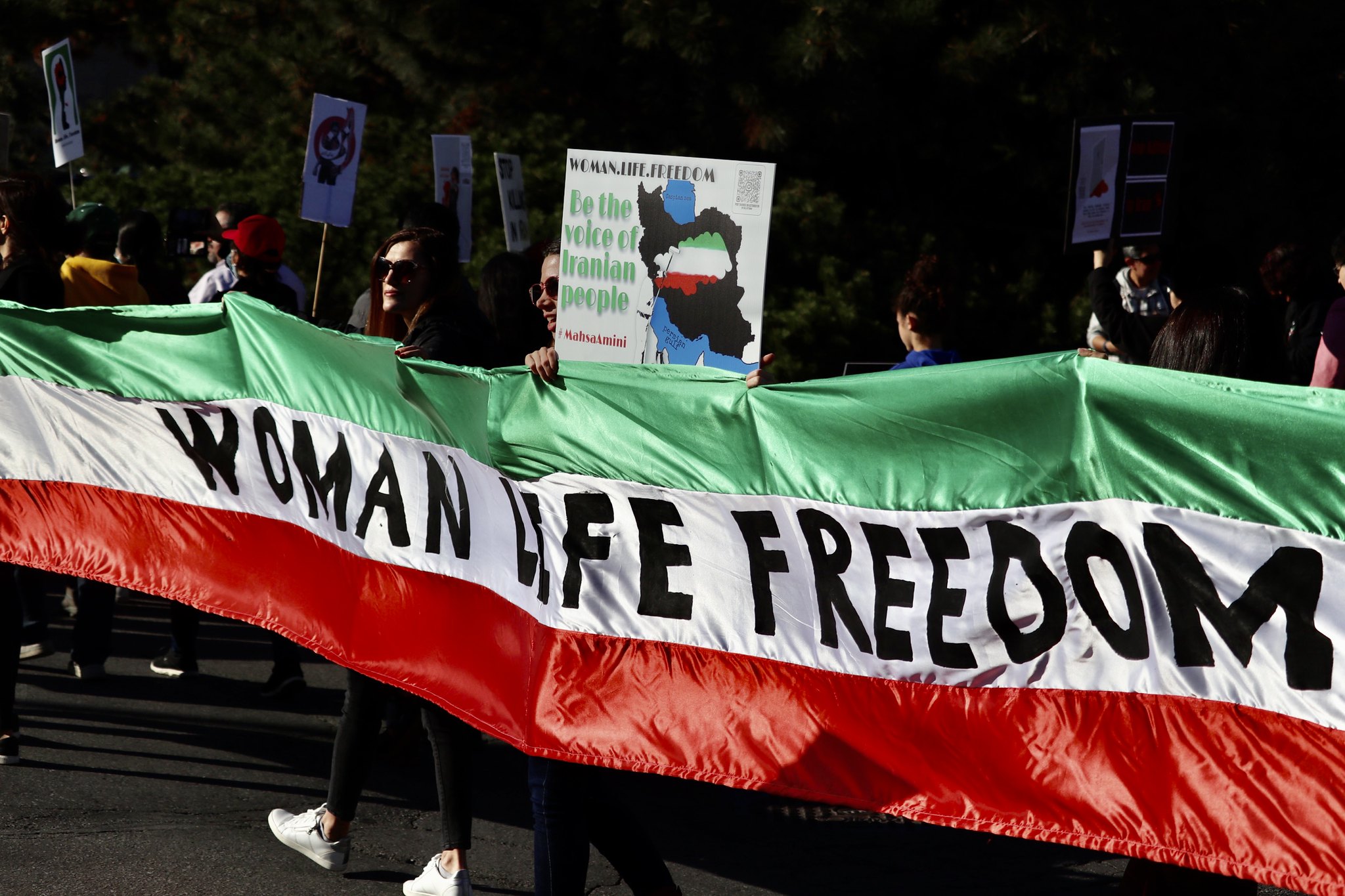
Waves of protests would start again in 2016 and continue every year until the recent war. In 2016, the Cyrus Great Revolt occurred on the Shah's birthday at the Tomb of Cyrus the Great, with a nationalist and monarchist flavour and opposing theocratic rule. The government's response was to ban Cyrus the Great Day, which was short-lived as the following two years saw the Dey Protests over economic hardship and general opposition to the government. This was also the time that the "Girls of Enghelab" protests were started, seeking the removal of the mandatory hijab law, with especially notable protests following the death of Mahsa Amini in 2022 and 2023. General strikes and further protestes would continue throughout 2018 and 2019, led by truckers, farmers, shopkeepers, and teachers, and would be followed up by strikes by petrochemical workers in 2021, and a series of protests against inflationary rise in basic staples after subsidies were removed on imported wheat; all this during the COVID-19 pandemic, which itself caused 146,837 deaths.
In 2025 and 2026, there were even more protests against the mismanagement of the water supply by farmers, and a massive campaign across the entire country against the regime in 2025 and into 2026. The Iranian government responded to these with outright massacres of protesters, with the Iran News Agency claiming almost 6.500 people had been killed; other sources make larger claims. Since the advent of the war, at least 3,375 Iranian civilians have been killed by US, Israeli and allied forces. Whilst the US and its allies have pointed to the very real humanitarian concerns as a justification, the underlying reality is the isolation of Iran as an anti-Israeli focus and its nuclear program. If the US were really concerned about civilian life, it would be arguing for armed peacekeepers in Gaza and would be directing proportional firepower against Israel.
This current war comes as part of a parallel international build-up. In 2015, Iran, with the UN Security Council permnanet members (China, France, Russia, the UK, the United State), plus Germany and the European Union, finalised the Joint Comprehensive Plan of Action (JCPOA), which allowed Iran's to develop a limited civilian and medical nuclear program in exchange for relief from international sanctions. In 2018, the US under Donald Trump decided to pull out of the JCPOA, and by October 2023, an IAEA report estimated Iran had increased its uranium stockpile 22 times over the JCPOA limit.
A conflict broke out when Israeli conducted an air-strike on the Iranian consulate in the Syrian capital of Damascus in 2024; another conflict would occur when Israeli airstrikes and assasinations killed many of the main leadership of Hezbollah and by the end of the year, Iran's main ally in the region, the Assad regime in Damascus, would be overthrown after the long-running and bloody civil war. As the IAEA found Iran to be non-compliant with its nuclear obligations, Israel launched strikes across Iran, targeting nuclear facilities and eliminating top members of Iran's military leadership, The Twelve-Day War.
In February 2026, the United States and Israel with the stated aim of regime change. Whilst they have been successful at killing the Supreme Leader Ali Khamenei, and Ali Shamkhani, former head of Iran's Supreme National Security Council, and several other Iranian officials, the regime remains in place with the Iran Revolutionary Guards taking up an increasingly dominant role in the running of the country and the military, as was well-known and predicted by Iranian observers. Whilst Iran does not have anything close to an equivalent firepower to the United States or Israel, they have continually managed to act on principles of decentralised and asymmetric warfare, using masses of relatively inexpensive Shahed and Arash drones to make the conflict increasingly financially unviable for the US.
"If we didn't hit within 2 weeks, they would've had a nuclear weapon. When crazy people have nuclear weapons bad things happen."
-- Donald Trump, March 4, 2026
The short version of this long article is that Iran has regressed in every step of its political governance from Mosaddegh to the present day, and at every step of the procedure, there has been an ongoing conflict between Iran's sovereignty versus Western imperialism, between secularism and theocracy, and between democratic rights and government suppression. The longer the current war continues, the more authoritarian and embedded the Iranian government will become, and the worse the situation will be for the United States; in a complete fumble of military strategy, they have no exit strategy, because they never considered the prospect of not winning. As much as one remains utterly opposed to wars of aggression against other countries, one also supports the rights of Iranians to determine their own future with peace, security, and rights. In this context, it means supporting women's rights groups like the "Woman, Life, Freedom " movement, secular-democratic groups like the "Freedom Movement of Iran", and for workers' rights, the independent "Free Union of Iranian Workers". Anyone who says that they oppose the Iranian regime, must show their support to people within the country, rather than promoting "regime change" from without.
- Log in to post comments